El Kantara — Biskra, 1961
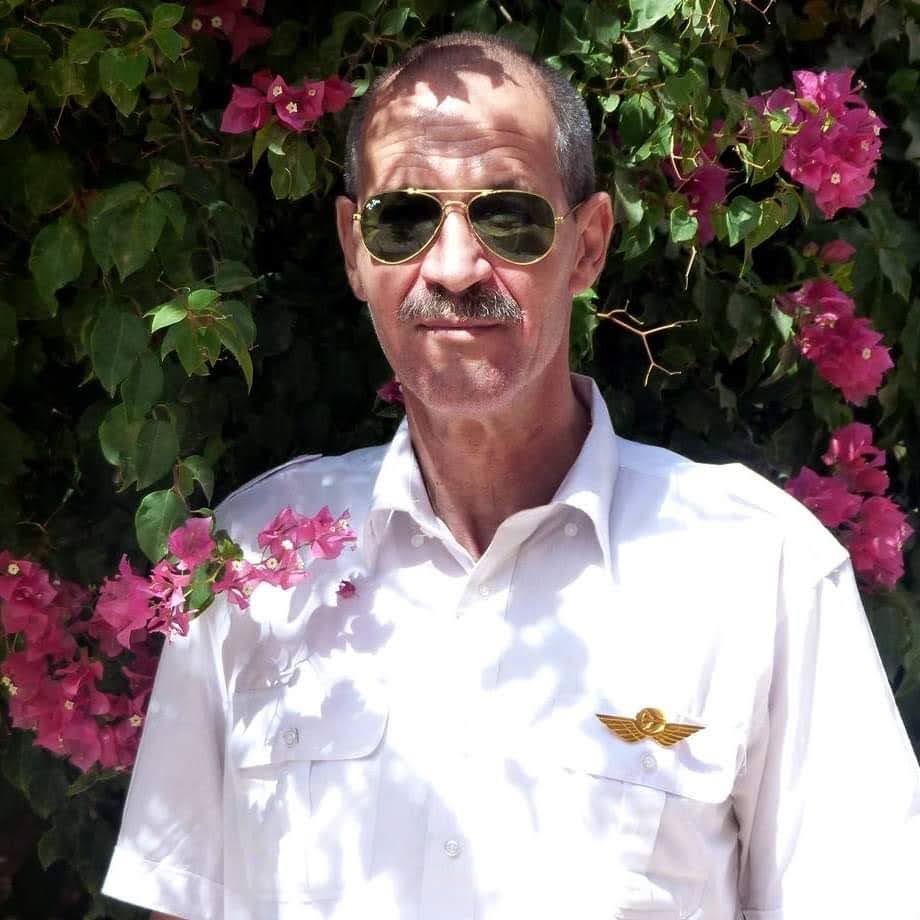
Some men are shaped by the places they come from. He came from El Kantara, where the mountain splits open and the desert begins — a gate between two worlds. It is a fitting origin for a man who would spend his life moving between them: between theory and the workbench, between the ground and the sky, between Biskra and the far end of a radio wave.
Mohamed Abdelaziz was born in Biskra in 1961. He did his primary, secondary, and high school years there, in the same light and the same heat, before leaving for Algiers to study Industrial Maintenance at the École Supérieure Polytechnique — the discipline of keeping complex machines alive, which suited a mind that had always preferred to open things rather than admire them closed.
Then there was the sky,
In 1982 he joined the Aéroclub de Biskra, and aviation became a lifelong attachment — the mechanics of flight, the discipline of it, the view. And when he could not fly, he transmitted. As a licensed Algerian radio amateur under the call sign 7X5CG, he turned an antenna toward the horizon and spoke to strangers in Tokyo, in São Paulo, in places he would never see — proof that a man in the Sahara is never really far from anywhere.
Electronics was never a subject for him. It was a language. He designed and built his own boards, wrote his own logic, and put microcontrollers to work long before that was an ordinary thing to do in a home workshop. Twice, the country noticed: two national prizes as an inventor.
He did see a great deal of the world in person. Years in Europe: long stays in the United Kingdom, France, and Belgium. He learned their workshops and their standards, and he came home carrying both.
Back in Algeria, that experience found its scale. He worked on the construction of ENICAB, the largest cable factory in the country, alongside German and Italian engineers from the supplier side — translating not only between languages but between engineering cultures, on a site where a misunderstanding costs more than a word.
Somewhere in all of this he built the thing he is proudest of. He and his wife raised three children: Ishak, the eldest, then Yasmine, then Iskandar — each of whom grew up in a house where a soldering iron was always warm and no question was ever considered too technical for the dinner table.
Retirement did not slow him down; it simply returned the bench to him. Today he is back where he started, with better tools — Arduino, Raspberry Pi, new microcontrollers, new projects — and the radio still on in the background, still listening.
He never really stopped transmitting.